Computer vision enables machines to derive meaningful information from digital images and videos, mimicking human visual perception. This technology has evolved from simple pattern recognition to sophisticated systems that can understand complex visual scenes.
The Foundation of Computer Vision
At its core, computer vision involves extracting, analyzing, and understanding information from visual data. Unlike human vision, which happens effortlessly, teaching computers to see requires sophisticated algorithms that can handle variations in lighting, perspective, occlusion, and countless other factors that make visual understanding challenging.
Traditional computer vision relied on hand-crafted features and classical image processing techniques. Researchers developed algorithms to detect edges, corners, and other distinctive patterns. While effective for specific tasks, these approaches required significant expertise and struggled with the complexity and variability of real-world images.
Convolutional Neural Networks Revolution
The introduction of convolutional neural networks transformed computer vision. CNNs automatically learn hierarchical features from images, starting with simple patterns like edges and progressively building up to complex object representations. This end-to-end learning approach eliminated the need for manual feature engineering.
The architecture of CNNs is specifically designed for image data. Convolutional layers apply filters across the image, detecting features regardless of their position. Pooling layers reduce spatial dimensions while retaining important information. These operations, combined with non-linear activations, allow CNNs to learn increasingly abstract representations through multiple layers.
Image Classification and Object Detection
Image classification assigns labels to entire images, identifying the primary subject or scene. Modern networks achieve superhuman accuracy on many classification tasks, recognizing thousands of object categories. Transfer learning allows these powerful models to be adapted to new domains with limited training data.
Object detection goes further, locating and classifying multiple objects within a single image. Techniques like R-CNN, YOLO, and their variants can identify numerous objects in real-time, drawing bounding boxes around each detection and providing confidence scores. This capability is essential for applications like autonomous driving and surveillance.
Semantic Segmentation and Instance Segmentation
Semantic segmentation classifies every pixel in an image, creating detailed maps that distinguish different objects and regions. This fine-grained understanding is crucial for applications requiring precise localization, such as medical imaging where identifying exact tumor boundaries can be critical.
Instance segmentation combines object detection with semantic segmentation, not only identifying object categories but also distinguishing between individual instances. This allows systems to recognize that there are three separate cars in an image, not just that cars are present. Such detailed understanding enables more sophisticated reasoning about visual scenes.
Applications in Healthcare
Medical imaging represents one of the most impactful applications of computer vision. AI systems analyze X-rays, CT scans, and MRIs to detect diseases, often matching or exceeding human expert performance. These tools assist radiologists by highlighting potential issues and providing quantitative measurements.
Pathology has been transformed by computer vision systems that analyze tissue samples, identifying cancerous cells with high accuracy. Ophthalmology uses these technologies to screen for diabetic retinopathy and other eye diseases from retinal images. Early detection through automated screening can prevent blindness and save lives.
Autonomous Vehicles and Robotics
Self-driving cars rely heavily on computer vision to perceive their environment. Multiple cameras provide 360-degree vision, while algorithms detect vehicles, pedestrians, traffic signs, and road markings in real-time. Combining this visual information with data from other sensors enables safe navigation through complex traffic scenarios.
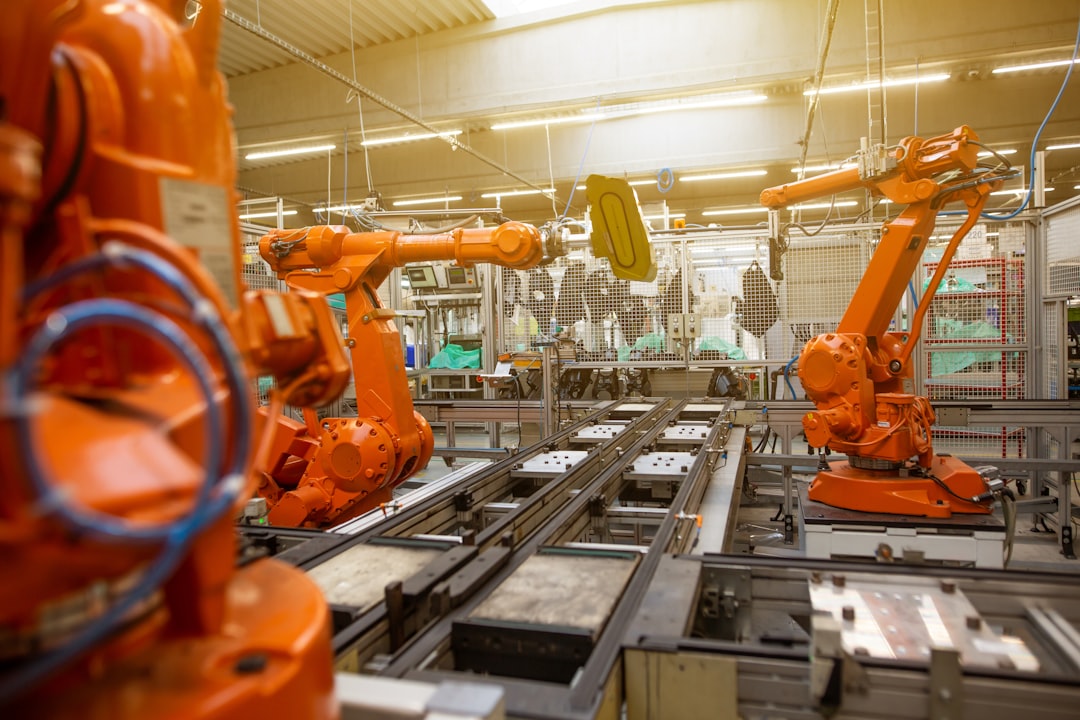
Industrial robots use computer vision for quality inspection, picking and placing objects, and navigating warehouses. These systems identify defects on manufacturing lines, sort products, and handle items of varying shapes and sizes. Vision-guided robots are more flexible than traditional automation, adapting to different tasks without extensive reprogramming.
Security and Surveillance
Facial recognition systems use computer vision to identify individuals from images or video streams. While controversial due to privacy concerns, this technology has applications in security, access control, and finding missing persons. The technology continues to improve in accuracy and robustness to variations in pose, lighting, and image quality.
Anomaly detection in surveillance footage identifies unusual events or behaviors that might indicate security threats. Rather than requiring human operators to monitor countless video feeds continuously, AI systems can alert them to situations requiring attention. Activity recognition classifies actions in videos, from detecting falls in elderly care to analyzing athletic performance.
Challenges and Considerations
Despite remarkable progress, computer vision faces ongoing challenges. Adversarial examples demonstrate that small, carefully crafted perturbations to images can fool even sophisticated models. Bias in training data can lead to systems that perform poorly on underrepresented groups. Ensuring fairness and robustness remains an active research area.
Privacy concerns accompany the widespread deployment of vision systems. Cameras capture vast amounts of visual data, raising questions about surveillance, consent, and data protection. Balancing the benefits of computer vision applications with individual privacy rights requires careful consideration and appropriate regulation.
The Future of Computer Vision
Computer vision continues to advance rapidly. 3D vision systems understand depth and spatial relationships, enabling applications in augmented reality and robotic manipulation. Video understanding goes beyond analyzing individual frames to comprehend temporal relationships and predict future events.
The integration of computer vision with other AI technologies creates even more powerful systems. Combining vision with natural language processing enables image captioning and visual question answering. Vision-language models can understand images in the context of textual descriptions, opening new possibilities for human-computer interaction.
As algorithms improve and computational resources become more accessible, computer vision applications will become increasingly ubiquitous. From enhancing smartphone cameras to enabling new forms of human-computer interaction, this technology will continue transforming how we capture, analyze, and understand visual information in the world around us.